Participant registration
Participant and Safety Regulations
The Dutchie Beach Sprint is all about nostalgia, friendship and above all:
fun! It's not about speeds for us, but about the pure experience of the
pre-war beach sprints. To keep the event smooth and safe for everyone
To prevent them from expiring, we apply strict guidelines. Read these requirements
carefully through.
For the cars, we have chosen a group with and a group
without classifying by roll bar. The group with roll bar and four-point harnesses sprints
over a distance of 200 metres and the group without roll bar sprints over a
distance of 150 metres.
A sprint distance of 150 metres applies to motorcycles.
Safety first!
The most important aspect of taking part is safety. As a rider, you are
You are primarily responsible for this yourself, but the organisation
checks this strictly. Fortunately, there is a wealth of expertise at the
Start: the official technical inspection is carried out in advance by the
specialists from
Tachyon Motorsport
.
Rules for Cars
The basics: Your vehicle’s engine must definitely be pre-war and
be original. Modern upgrades such as electronic ignition systems or heavy-duty
Tuned engines are not permitted.
During the technical inspection, the following are checked rigorously:
Points:
- Roll bar:
It must be designed to match the car’s style perfectly. A removable
A roll bar is permitted, provided it is fitted directly to the chassis using at least 4 bolts
The chassis is secured. The bracket must also be at least 10 centimetres
project above the driver's helmet. - Seat belt:
A four-point harness (full harness) is compulsory and must be securely fastened to the
chassis have been fitted. - Seat fitting:
The seats must be securely fitted to the chassis and must be
reinforced with iron strips. - Helmet:
The helmet must be certified and must not be more than 10 years old.
A lovely, vintage patina look is, of course, just fine! - Fire extinguisher:
There must be a fire extinguisher on board that is always within easy reach,
even when you’re fully buckled in. - Fluids & Engine:
The engine compartment must be clean and there must be absolutely no sign of
oil or petrol leaks. - Cooling:
Only drinking water must be used in the radiator.
Coolant is strictly prohibited on the beach. - Engineering & Steering
The shock absorbers must function properly. In addition, we will check the
steering system critical for play and secure mounting. - Borging:
The bonnet must be additionally secured at all times with, for example, a
authentic leather belt or another secure fastening. - Headlamps:
Headlights are permitted, but the glass and housing must be compulsory
are taped over with duct tape.
Motorcycle Regulations
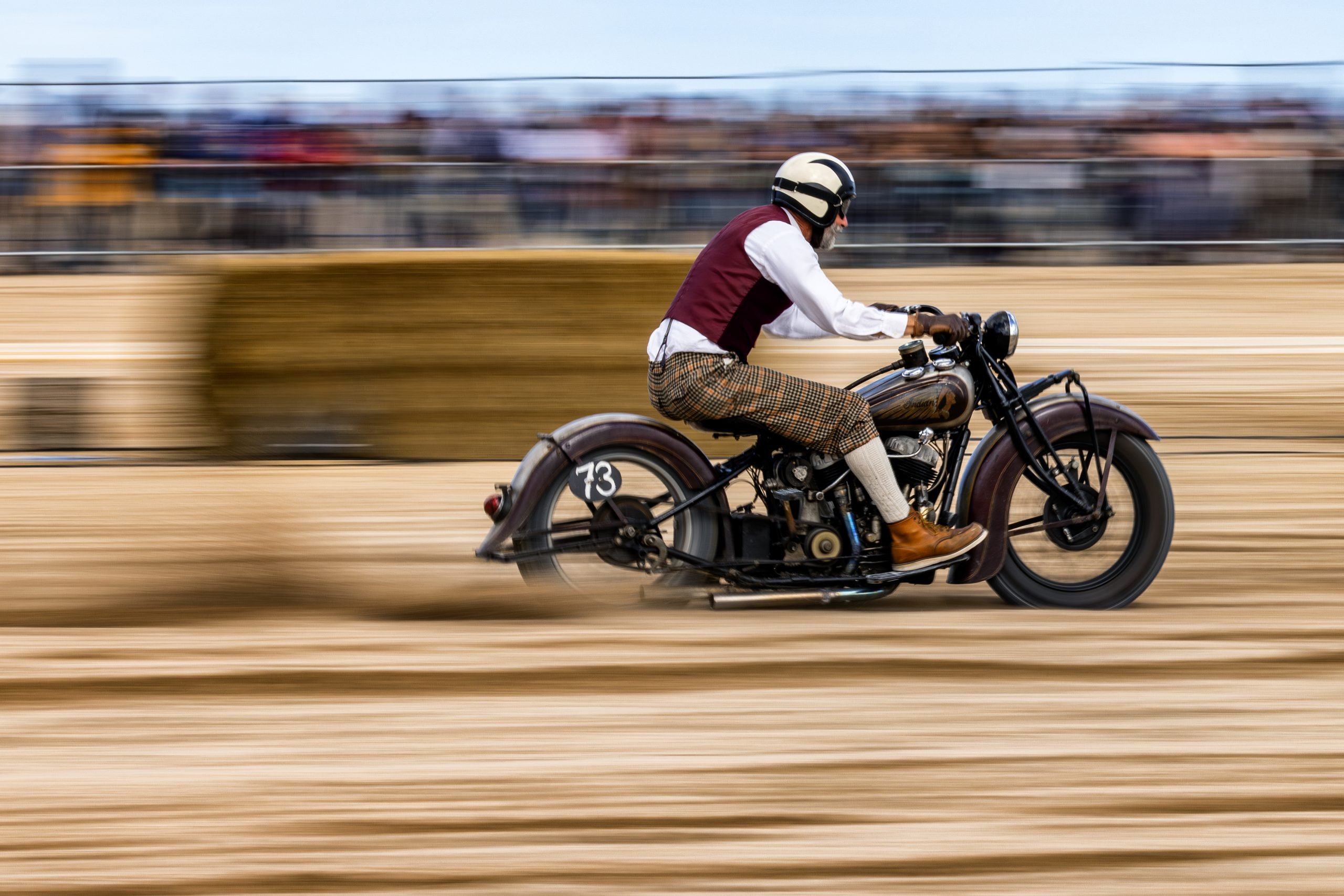
For motorcyclists, the following compulsory equipment requirements apply to
to be allowed to take up a job:
- Helmet:
A certified helmet that is no more than 10 years old.
(Patina is allowed here too!) - Back protection:
Every motorcyclist is required to wear a protective back shield
to wear a back protector. - Clothing:
Sturdy trousers and gloves must be worn. - Footwear
Sturdy shoes, preferably leather boots or boots. - Eye protection:
Wearing proper safety goggles is compulsory to protect your eyes
to protect against flying sand.
 English (UK)
  Nederlands